Give me stable diffusion architecture diagrams
stable diffusion architecture diagrams 2025
Added the year to focus on the most recent architecture diagrams related to stable diffusion, ensuring that the results are current and relevant.

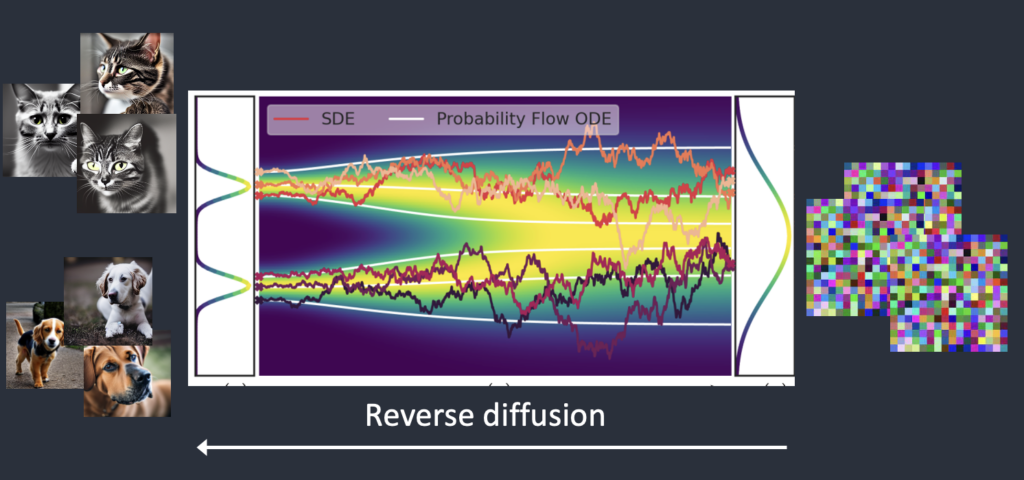
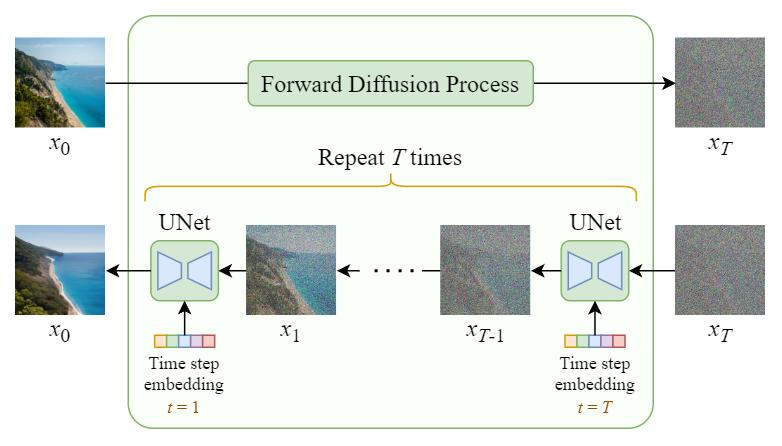

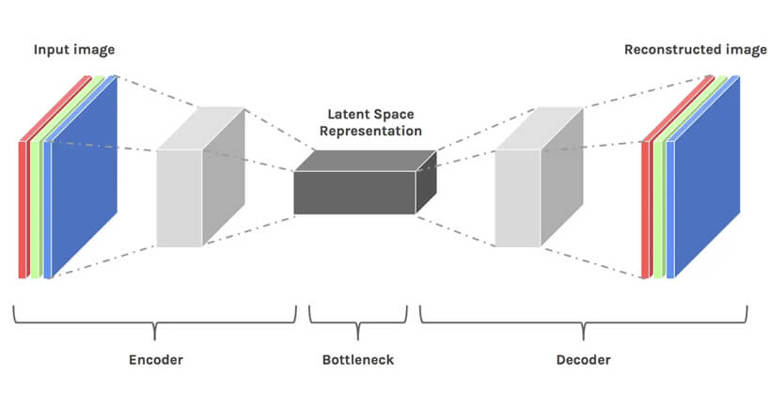
Stable Diffusion is a powerful deep learning model used in AI for generating images from text prompts. Understanding its architecture can provide insights into how these systems function and create impressive visual content. Below, I have compiled several notable architecture diagrams that illustrate different aspects of Stable Diffusion.
Overview of Stable Diffusion Architecture
Stable Diffusion utilizes a model based on a latent diffusion approach, combining both generative and conditional aspects to produce high-quality images. The architecture typically involves components such as a U-Net for denoising, a Variational Autoencoder (VAE) for image encoding and decoding, and a text encoder (like CLIP) for understanding the prompt inputs.
1. General Architecture of Stable Diffusion
This diagram provides an overview of the core components involved in Stable Diffusion, highlighting the flow from input text to image generation.

Stable Diffusion architecture overview (Source: LearnOpenCV)
2. Detailed Layer Structure
This image breaks down the architecture into its respective layers, showcasing the connectivities and operations that occur at each stage of the generation process.
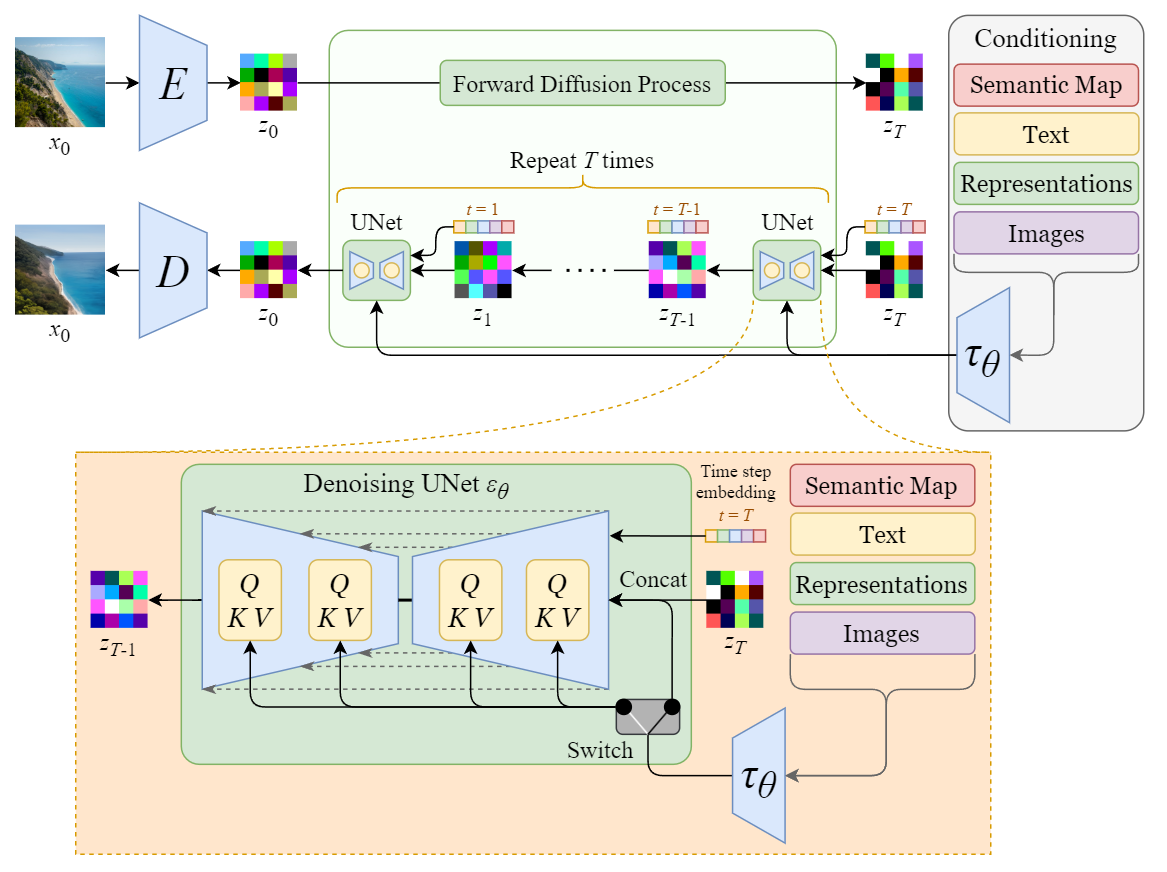
Layer structure of Stable Diffusion (Source: Medium)
3. Pixel-Aware Stable Diffusion Architecture
This diagram specifically focuses on the pixel-aware modifications made to enhance certain outputs and improve fidelity to the input prompt. It showcases how pixel information is utilized more effectively in the process.

Pixel-aware stable diffusion architecture (Source: ResearchGate)
4. Variational Autoencoder Network
This diagram emphasizes the role of the VAE in encoding images before the denoising process takes place in the U-Net.

VAE network architecture in Stable Diffusion (Source: TutorialsPoint)
5. Architecture of the Stable Diffusion Model
Here, another look at the general architecture highlights specific feature extraction and processing nodes that collectively support the entire generative framework.
Architecture of the Stable Diffusion model (Source: ResearchGate)
Conclusion
These architecture diagrams illustrate the complexity and innovative design behind Stable Diffusion, highlighting its ability to generate stunning visual content based on textual descriptions. By understanding these components, developers and researchers can appreciate the intricate process that enables this advanced AI technology. For anyone looking to delve deeper into the workings of Stable Diffusion, the provided resources and diagrams are invaluable.